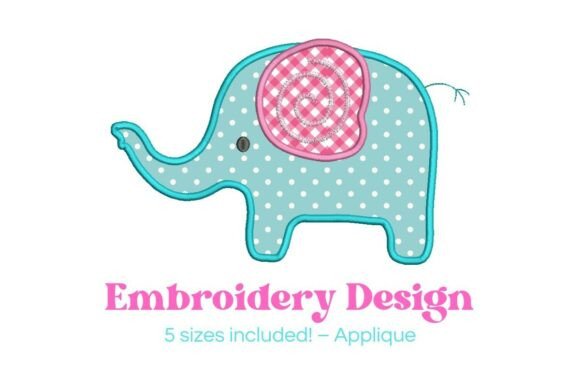
Reviewing the Baby Elephant Applique Embroidery Design
As a designer who has spent countless hours digitizing patterns and testing files on various machines, I approach every new machine embroidery design with a mix of curiosity and skepticism. We have all been there: you download a cute graphic, load it onto your hoop, and hope for the best, only to find puckering fabric or thread breaks. That is why I took a close look at the Baby Elephant Applique Embroidery design. This is not just about whether it looks cute on a screen; it is about how it performs when the needle hits the fabric.
The first impression of this piece is undeniably charming. It captures that soft, whimsical mood essential for the Nursery category. The silhouette is rounded and friendly, avoiding sharp angles that can be tricky to stitch cleanly. For those of us creating handmade products, visual appeal is the first hook, but stitching clarity is what keeps customers coming back. This design balances artistic craftsmanship with technical practicality, making it a strong candidate for both personal projects and commercial use.
Real-World Application: The Custom Tote Test
To truly evaluate an applique design, you have to imagine it in a real-life scenario. I recently worked on a custom order for a local boutique needing a set of reusable shopping bags. They wanted something gender-neutral yet playful. I chose the Baby Elephant Applique Embroidery for a canvas tote bag. Here is why this specific design worked well in that context.
Applique is inherently different from standard fill work. It relies on placing a piece of fabric under the stitch area, which reduces bulk and adds texture. In this case, the elephant shape provided a perfect frame for a contrasting cotton fabric. I used a soft gray linen for the elephant body against a natural beige canvas. The result was a sophisticated, textured look that felt high-end rather than mass-produced. For an Etsy seller or small shop product owner, this distinction matters. It elevates the perceived value of the finished product.
If you are considering this for sweatshirt embroidery or custom apparel, the logic remains the same. The design sits flat against the garment, which is crucial for comfort, especially in baby embroidery projects where scratchy, dense stitches can irritate sensitive skin. The open nature of applique allows the garment’s fabric to breathe through the design, preventing that stiff, cardboard-like feel often associated with heavy fill stitch areas.
Technical Performance and Stitch Quality
Let’s talk about the mechanics. A successful embroidery project depends on how the file handles transitions. In reviewing this design, I looked closely at the tack-down stitches and the finishing border. The design appears to utilize a combination of running stitch for placement and a tighter satin or narrow zigzag for the final edge. This is a smart choice. A wide satin stitch can sometimes look bulky on small curves, while a narrow finish keeps the lines crisp.
However, you must pay attention to stitch density. Even though applique uses less thread than full coverage designs, the border stitches must be dense enough to cover the raw edges of your fabric cut. If the density is too low, you risk fraying after a few washes. I recommend testing the design on scrap fabric first. Check if the thread colors you choose provide enough contrast. A monochromatic look can be elegant, but if the thread matches the applique fabric too closely, the definition of the elephant might get lost, especially from a distance.
For commercial embroidery users running multiple heads, consistency is key. Ensure your stabilizer choice matches your fabric. For a tote bag, a cut-away stabilizer provides lasting support. For a stretchy t-shirt, a tear-away with a fusible topping might prevent sinking. Always confirm the recommended hoop size before starting. While this design likely fits in a standard 4x4 or 5x7 hoop, checking the dimensions ensures you do not run out of space for positioning.
Where to Use Caution
No design is universal, and honest reviews require pointing out limitations. While the Baby Elephant Applique Embroidery is versatile, there are scenarios where you should proceed with care.
- Curved Surfaces: Stitching on caps or hats requires precise hooping. The rounded shape of the elephant can distort if the fabric shifts during the applique placement step. Use strong adhesive stabilizers here.
- Thin or Sheer Fabrics: If you are working with lightweight voile or silk for a delicate baby blanket, the weight of the applique fabric plus the stitching might cause pulling. Always test on a similar weight fabric first.
- Dark Fabrics: If your base fabric is dark, ensure your placement stitches are visible. You might need to use a temporary marking pen or a contrasting thread for the initial tack-down, which you later trim away or cover.
- Small Details: If you scale the design down significantly for a pocket patch or a small corner accent, verify that the curves remain smooth. Tiny scales can lead to jagged edges if the machine’s resolution cannot handle the tight turns.
Boosting Brand Value and Customer Trust
For creative entrepreneurs and digital product sellers, the choice of design reflects your brand. Using a well-balanced applique like this signals professionalism. It shows you understand texture and composition. When customers see a clean, crisp edge on an embroidered patch or a pillow cover, they trust the durability of the item. This trust translates into repeat business and positive reviews.
Consider using this design for holiday embroidery gifts. An elephant motif can easily be adapted for baby showers, first birthdays, or even as a subtle accent on adult items like tote bags or aprons. The versatility allows you to create a cohesive collection. For example, you could offer a matching set: a bib, a burp cloth, and a onesie, all featuring the same elephant. This bundling strategy increases the average order value for your craft business.
When creating printable mockups or design assets for your online store, remember to showcase the texture. Photos that highlight the fabric contrast in the applique perform better than flat digital renders. Show the fabric texture and the sheen of the thread. This helps buyers visualize the personalized gift in their hands.
Final Designer Notes
Before you commit to a large production run or list this as a new item in your shop, take these practical steps:
- Check Licensing: Always confirm the license terms for the digital embroidery file. Ensure you have the right to sell finished items if you are a small business owner.
- Test Thread Contrast: Try the design in black and white mockups first to see if the shape holds up without color reliance.
- Inspect Small Details: Zoom in on the digitized file. Look for unnecessary jumps or loose threads that might need trimming.
- Compare Backgrounds: Stitch one sample on light fabric and one on dark. This helps you determine if you need to adjust thread weights or colors for different product lines.
The Baby Elephant Applique Embroidery is a solid addition to any designer’s library. It offers a blend of charm and technical ease that suits a wide range of applications, from tote bag design to nursery decor. By understanding its strengths and respecting its limitations, you can create high-quality, professional pieces that resonate with customers. Whether you are a hobbyist making gifts for friends or an apparel decorator supplying local boutiques, this design provides a reliable foundation for creative expression. Just remember: the magic is in the execution. Take your time with the applique placement, choose your stabilizer wisely, and let the craftsmanship speak for itself.