Review: Marriage Material 3D Embroidery Design
As an embroidery designer who has spent years digitizing and testing files for small business merchandise, I approach every new machine embroidery design with a critical eye. It is not enough for a design to look pretty on a screen; it must perform under the needle, withstand washing, and elevate the brand identity of the client using it. Today, I am reviewing the Marriage Material 3D Embroidery Design, a file positioned within the Wedding Quotes category but possessing significant potential for broader commercial application.
For boutique owners, Etsy sellers, and apparel decorators, the difference between a amateur-looking product and a premium finished product often lies in the quality of the digital assets used. This review evaluates how this specific design functions in real-world scenarios, from branded patches to custom apparel, ensuring you understand its value before adding it to your library.
First Impressions and Visual Personality
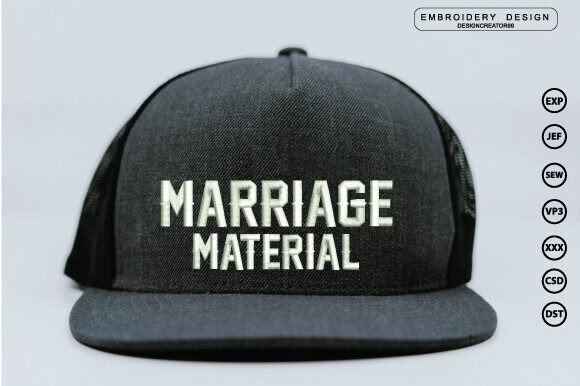
The title Marriage Material immediately suggests a tone that is playful yet romantic. In the context of Wedding Quotes, this phrase carries a modern, slightly humorous weight that appeals to contemporary couples. Visually, the inclusion of "3D" in the title indicates that the design likely utilizes puff foam or high-density stitching to create texture and depth. This is a crucial distinction for designers because 3D elements require specific handling regarding fabric choice and stabilizer selection.
The aesthetic feels both elegant and approachable. It is not overly ornate, which makes it versatile. For a handmade brand, this balance is essential. A design that is too complex can look messy on smaller items, while one that is too simple may lack perceived value. This design appears to strike a middle ground, offering enough detail to be interesting without becoming a nightmare to stitch out on textured fabrics.
Commercial Viability for Small Business Merch
When I evaluate a digital embroidery file for business use, I ask: Where can this go? The description notes that this design can be stitched into wedding decor, pillows, hats, t-shirts, tote bags, or gifts. Let us break down how this works for specific revenue streams.
- Embroidered Patches: This is perhaps the strongest use case. A 3D design translates beautifully to a patch format. Patches are low-risk, high-margin items for small businesses. They can be sold as standalone accessories or added to jackets and bags. The tactile nature of 3D stitching adds a premium feel that customers love to touch.
- Cap Embroidery: Hats are a staple of promotional merch. However, cap fronts are curved and limited in space. If the design is compact, it works well here. The 3D element stands out against the structured fabric of a baseball cap, creating a bold logo accent that catches the eye.
- Tote Bag Design: Canvas totes are popular for bridal parties and wedding favors. The sturdy fabric of a tote bag supports heavier stitch densities well. Using this design as a central focal point on a tote creates a functional keepsake that guests will actually use, extending the reach of your brand.
- Apron Embroidery: For bakeries, florists, or craft studios, branded aprons are excellent staff uniforms. A playful quote like "Marriage Material" could be adapted for engagement party staff or bridal shop employees, adding personality to the workwear.
The versatility of this design allows it to cross over from strict wedding niches into general lifestyle branding. A creative studio might use it for Valentine’s Day promotions, or a pet brand might use it for "fur-ever" themed merchandise, provided the licensing allows for such adaptations.
Technical Considerations and Production Notes
While the artistic merit is important, the technical execution determines whether a project is profitable. Here are my professional notes for stitching this design.
Fabric and Stabilizer: Because this is a 3D design, you must use the correct stabilizer. A cut-away stabilizer is generally recommended for 3D work to support the weight of the puff foam and the stitches. Avoid using this on very thin or stretchy fabrics without proper backing, as the tension from the 3D stitches can cause puckering. Always test on a scrap piece of your actual fabric first.
Stitch Density and Detail: 3D designs often have higher stitch counts. You need to check if the design fits within your machine’s hoop size limitations. If you are scaling the design down for a small patch, ensure that the details do not become too dense. High density on a small scale can lead to thread breaks and needle heat. Conversely, if the design includes tiny lettering, verify that it remains legible at smaller sizes.
Thread Colors: Contrast is key. Since 3D stitching relies on shadow and height to create its effect, using monochromatic threads (like white on white) may flatten the look. Choose thread colors that contrast slightly with the base fabric to highlight the dimensional aspect. Test your thread colors against both light and dark uniforms to ensure visibility.
File Formats: The product description states that nine formats are included, specifically mentioning PES for Brother and Deco. This is a strong selling point, as PES is one of the most common formats for home and small business machines. However, always confirm that the specific format you need for your machine (such as DST, JEF, or XXX) is included in the package before purchase. If you are running a multi-head commercial machine, ensure you have the appropriate conversion software if your native format is not listed.
Brand Identity and Customer Trust
Using high-quality designs like Marriage Material 3D Embroidery Design directly impacts your brand identity. When a customer receives a item with clean, well-digitized embroidery, it signals professionalism. It builds trust. Sloppy stitching or poorly chosen designs can detract from the perceived value of even the most expensive garment.
For Etsy sellers and handmade brands, consistency is vital. If this design fits your visual style, it can become part of a cohesive collection. Use it alongside other design assets to create a unified look across your product line. Create a printable mockup to show clients how the design will look on different items before they commit to a custom order. This reduces revision requests and increases buyer engagement.
Where to Use Caution
Not every item is suitable for this design. Avoid using it on items that require frequent, harsh washing if the 3D element is not securely anchored, as puff foam can degrade over time. Be cautious with curved surfaces like the side of a shoe or a small pocket, where the hoop placement might be difficult. Additionally, if the design contains fine lines, avoid using it on highly textured fabrics like fleece or terry cloth, as the texture can obscure the details.
Final Verdict for Designers
The Marriage Material 3D Embroidery Design is a solid addition to a commercial embroidery library, particularly for those targeting the wedding and gift markets. Its strength lies in its tactile appeal and modern phrasing. To maximize its potential:
- Test it in black and white first to check for clarity.
- Confirm the commercial licensing terms allow for the volume of sales you plan.
- Use proper stabilizers to support the 3D structure.
- Create mockups to visualize the design on caps, totes, and patches.
By treating this file as a strategic business asset rather than just a decorative element, you can leverage it to create high-value small business merch that stands out in a crowded market. Always prioritize quality control in your production process to ensure that every stitched item reflects the professionalism of your brand.